
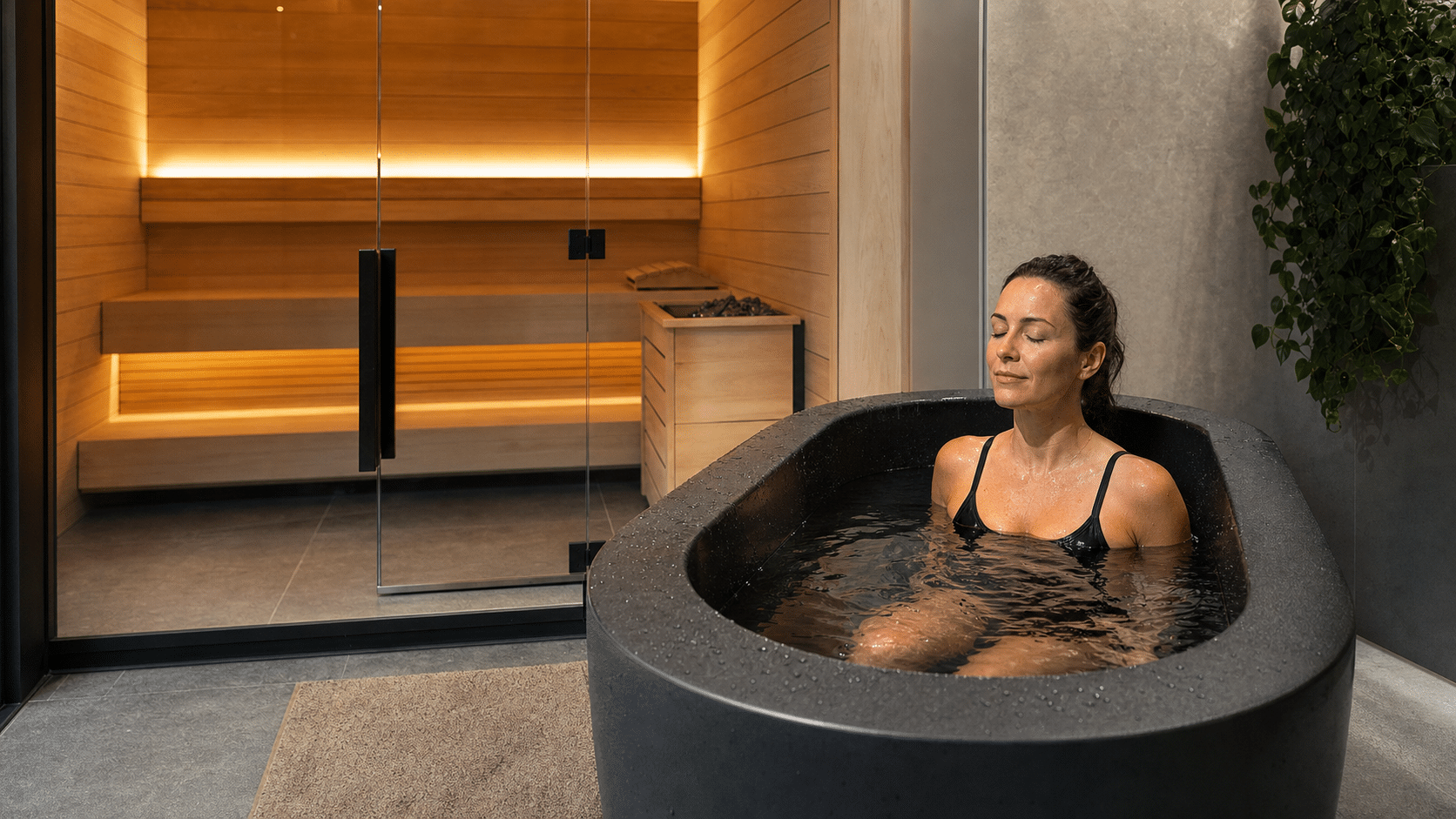
Contrast therapy has quickly moved from elite training facilities and luxury spas into everyday homes, and for good reason. By alternating between heat and cold exposure, you can support recovery, improve circulation, and create a powerful daily wellness ritual. The best part? You don’t need a commercial facility to get started. With the right approach, building a contrast therapy home setup is more achievable than you might think. If you’ve been curious about contrast therapy at home, this guide will walk you through everything you need to know, from how it works to how to design your own contrast therapy room and safely incorporate it into your routine.
What Is Contrast Therapy?
Contrast therapy is the practice of switching between hot and cold environments to stimulate the body’s natural recovery processes. Most commonly, it involves moving between a sauna and a cold plunge, ice bath, or cold shower. The science behind it is simple but effective. Heat causes blood vessels to dilate, increasing circulation and relaxing muscles. Cold causes those vessels to constrict, reducing inflammation and activating the nervous system. Alternating between the two creates a “pumping” effect that helps move blood, oxygen, and nutrients throughout the body more efficiently. This is why many athletes and wellness enthusiasts rely on contrast therapy to support recovery and overall health.
Why Try Contrast Therapy at Home?
Traditionally, contrast therapy required access to a gym, spa, or recovery center. Now, more homeowners are investing in home spa setups to make them part of their daily lifestyle. Creating a contrast therapy home setup offers several advantages. First, it gives you consistency; you can use it whenever it fits your schedule. Second, it allows for customization, so you can tailor the experience to your preferences and space. And finally, it creates a private, convenient wellness routine that eliminates the need to travel or share facilities. Whether you’re focused on fitness, stress relief, or simply building better habits, contrast therapy at home can be a powerful addition to your routine.
How to Do Contrast Therapy at Home
If you’re looking to experience the benefits of contrast therapy at home, the process is pretty straightforward. The goal is to alternate between heat and cold in a controlled, intentional way.
A basic beginner routine might look like this:
- Start with heat. Spend 10 to 15 minutes in a sauna to warm the body and promote sweating.
- Transition to cold. Move into a cold plunge, ice bath, or cold shower for 1 to 3 minutes.
- Repeat the cycle. Alternate between hot and cold 2 to 3 times, depending on your comfort level.
The key is to listen to your body. You don’t need extreme temperatures or long sessions to experience benefits. Consistency matters more than intensity, especially when you’re just starting.
Building Your Contrast Therapy Setup at Home: 3 Considerations
Designing a contrast therapy home spa setup doesn’t have to be complicated, but it does require thoughtful planning. At its core, you need two elements: a heat source and a cold source.
1. Heat Options
The most common heat source is a sauna. Traditional saunas provide high, dry heat, while infrared saunas use light to heat the body more directly at lower temperatures. For a true contrast therapy experience, many homeowners prefer traditional saunas because they produce intense heat and encourage sweating.
2. Cold Options
For cold exposure, you have a few choices depending on your budget and space. Cold plunges offer the most controlled and consistent experience, allowing you to set precise temperatures. Ice baths are a more manual option, requiring you to add ice to reach your desired level. Cold showers are the simplest and most accessible starting point.
3. Space Considerations
When creating your setup, consider how the two elements will work together. Ideally, your sauna and cold plunge should be close enough to move between quickly. This minimizes the time your body spends at room temperature and keeps the contrast effect strong.
Designing a Contrast Therapy Room
For those looking to take things further, creating a dedicated contrast therapy room can elevate the entire experience. A well-designed contrast therapy room isn’t just functional; it’s an environment that supports relaxation and recovery. Many homeowners incorporate features like natural wood finishes, soft lighting, and calming design elements to create a spa-like atmosphere.
Ventilation is also important, especially when combining heat and cold in one space. Proper airflow helps regulate temperature, prevent moisture buildup, and protect materials over time. If space allows, consider adding seating, storage, or even a shower to complete the setup. The goal is to create a seamless flow between heat, cold, and rest.
Benefits of Contrast Therapy at Home
One of the biggest advantages of contrast therapy at home is how easily it fits into your lifestyle. With a dedicated wellness room, you can turn a healthy practice into a daily habit. Many people report improved recovery after workouts, reduced muscle soreness, and better circulation. Others find that contrast therapy helps them manage stress more effectively, leaving them feeling both relaxed and energized. There’s also a mental component. The discipline of stepping into cold water builds resilience, while the warmth of a sauna encourages calm and mindfulness. Together, they create a balanced experience that supports both physical and mental well-being.
Safety Tips for Beginners
While contrast therapy is generally safe for healthy individuals, it’s important to approach it carefully, especially when starting. Begin with shorter sessions and moderate temperatures. You don’t need extreme heat or freezing water to see benefits. Stay hydrated, particularly after sauna use, and pay attention to how your body responds. If you feel dizzy, lightheaded, or uncomfortable at any point, stop immediately. Those with cardiovascular conditions or other health concerns should consult a healthcare professional before beginning a routine.
Making Contrast Therapy a Routine
Like any wellness habit, consistency is key. You don’t need to do contrast therapy every day to benefit, but even a few sessions per week can make a noticeable difference over time. Find a schedule that works for you, whether it’s after workouts, in the evening to unwind, or as a part of a weekend reset. Over time, your body will adapt, and the process will feel more natural and rewarding.
Upgrade Your Wellness Routine with Qontrast
Building a contrast therapy home setup is one of the most impactful ways to invest in your wellness routine, and Qontrast is here to help you do it right. From custom traditional saunas to premium cold plunge systems and fully designed contrast therapy rooms, Qontrast specializes in creating tailored wellness rooms that fit your home and lifestyle. Every system is built with quality materials, precision craftsmanship, and long-term performance in mind.
Whether you’re just starting to explore how to do contrast therapy at home or are ready to create a complete in-home wellness retreat, Qontrast can bring your vision to life. Take the first step toward a better recovery and relaxation routine. Contact Qontrast today to start designing your custom contrast therapy space.